

AI SEO Tips for Insulation Contractors: Rank on Google and Get Named in AI Answers (2026)
AI SEO tips for insulation contractors are data-driven strategies that help insulation and HVAC businesses rank on Google and appear in AI-generated search answers.
Key Takeaways
- AI SEO for insulation contractors means optimizing for Google AI Overviews, ChatGPT, Perplexity, and Gemini using answer-first content, reviews, and off-page entity mentions.
- Your customers are split - half Google you, half ask ChatGPT - and missing either surface costs real revenue every single day.
- Traditional SEO metrics like backlinks and domain authority predict only 4-7% of AI citation behavior, so off-page mentions now outrank rankings.
- Insulation contractors need 50-plus Google reviews with specific service names, cities, and outcomes to show up in local AI recommendations.
- A single NAP mismatch across directories disqualifies your listing from AI-generated local results before review count or content quality is ever evaluated.
Insulation contractors who show up in Google AI Overviews, ChatGPT, Perplexity, and Gemini in 2026 capture leads before a competitor’s phone even rings - and the tactics that get you cited by AI differ by engine. Your customers are split: half Google you, half ask ChatGPT. If AI systems are not recommending your business by name, you are losing jobs to contractors who figured this out first. The highest-leverage move right now is treating Google AI Overviews, ChatGPT, Perplexity, and Gemini as separate systems with different trust signals - and building a strategy that feeds all four.
How Insulation Contractors Win at ChatGPT SEO in 2026: A Strategy Guide for the Local Market
Insulation contractors who show up in Google AI Overviews, ChatGPT, Perplexity, and Gemini results in 2026 capture leads before a competitor’s phone even rings. About 45% of U.S. adults used AI-powered search engines at least once a month in 2024, and that number climbs every quarter.[1] Your customers are split - half Google you, half ask ChatGPT - and a contractor without a presence on both surfaces loses real revenue every single day.
The AI SEO strategy for insulation contractors in 2026 runs on five pillars:
- Answer-first content - Structure every service page so the first sentence answers the searcher’s question directly. Google AI Overviews, ChatGPT, Perplexity, and Gemini all lift answer-first sentences verbatim.
- Entity authority - Publish your brand name, service area, and specialization (spray foam, blown-in, rigid board) consistently across your website, Google Business Profile, Yelp, Angi, and industry directories so AI search engines recognize your insulation company as a trusted local entity.
- Off-page mentions - Earn citations on Reddit, Quora, LinkedIn, and YouTube. These third-party mentions are among the highest-leverage signals for ChatGPT, Perplexity, and Gemini to recommend a contractor by name.
- Review volume and specificity - Google Business Profile reviews that name your services and city feed directly into Google AI Overviews and local AI search results. Backlink authority still matters for Google AI Overviews specifically, but reviews outrank a backlink for ChatGPT and Perplexity citations.
- Real-time AI visibility monitoring - Track whether AI systems are recommending your business right now, not six months from now when the lead gap is already wide.
61% of marketers reported that AI increased their organic traffic, and 72% considered AI central to future strategies.[1] For an insulation contractor competing against HVAC companies that already run AI SEO for HVAC campaigns, waiting is not a strategy - it is a concession.
How To Check if Google AI Overview Appears for Homeowner Searches and if Your Insulation Company Is Featured in ChatGPT Results
Your customers are split. Half Google you. Half ask ChatGPT. If your insulation company does not show up in both places, you are handing jobs to competitors who do. Around one-in-five Google searches in March 2025 produced an AI-generated summary as part of the search engine result page.[2] Users who encountered an AI summary clicked on a traditional search result link in only 8% of visits - compared to 15% for users who saw no AI summary.[2] That gap is real revenue leaving your business right now.
The fastest way to check your Google AI Overview exposure is to run the exact searches your homeowners run - phrases like “spray foam insulation contractor near me” or “attic insulation cost [city]” - directly in an incognito browser window. If a Google AI summary appears above the organic results on the search engine result page and your brand is not cited inside it, a competitor is capturing that attention instead of you.
For ChatGPT visibility, the check is equally direct: open ChatGPT and ask it to recommend an insulation contractor in your service area. Note which brand names appear. If yours is absent, AI search is actively routing homeowners away from you. Be Found Everywhere built its LABs diagnostic tool specifically to automate this process - running one-click checks across ChatGPT, Gemini, Perplexity, Google AI Mode, and AI Overview simultaneously so contractors get a real-time answer without manually querying every platform. That is the kind of AI SEO strategy that turns a blind spot into a concrete action plan for insulation contractors competing in a market where both Google and LLMs now shape buying decisions.
How ChatGPT Ranks Location and Service-Area Pages Without Triggering Google Duplicate Content Filters
The practical AI SEO strategy here is to feed location-specific seed terms into an AI content workflow that pulls in real local variables - climate data, permit requirements, neighborhood names - rather than just swapping city names in a generic template.
Here is a repeatable process for an insulation company or HVAC contractor building out a multi-city presence:
- Run a geo-targeted keyword pass - Use an AI-powered keyword tool to pull city-level search volume and identify the exact phrases homeowners in each market ask before hiring a contractor.
- Anchor each page to a local data point - Climate zone, average heating bill, or local building code gives Google and ChatGPT a factual hook that is unique to that geography.
- Vary the content structure - Rotate the order of sections (proof, process, FAQ) across pages so the structural fingerprint differs even when the service offering is the same.
- Build location-specific backlinks - A single backlink from a local chamber of commerce or regional home-improvement directory signals geographic relevance that a generic backlink does not.
- Monitor AI visibility per location - Track whether ChatGPT and Google AI are citing your brand for each city, not just your homepage, so you catch gaps before competitors fill them.
This approach lets an insulation contractor or AI SEO for HVAC operator scale to 20 or 30 city pages without triggering duplicate filters - and without writing every page manually from zero.
What Free or Low-Cost Tools-Including ChatGPT-Can I Use in 2026 to Track AI Visibility and Whether My Insulation Business Is Being Recommended by AI Search Engines?
Free and low-cost tools give insulation contractors a working AI visibility strategy without a large budget - but knowing which tool answers which question is the difference between actionable data and wasted time.
Your customers are split. Half Google you. Half ask ChatGPT, Perplexity, or Gemini. Tracking both sides of that split requires a different tool for each surface. AI search traffic rose 527% year over year, which means an insulation company that only monitors Google rankings is flying blind on the half of the market that now asks AI before clicking anything.[3]
Here is how to cover each engine without overspending:
| Tool | What It Tracks | Cost | Best For |
|---|---|---|---|
| ChatGPT (manual prompts) | Whether ChatGPT names your brand in “best insulation contractor in [city]” queries | Free | Quick brand-mention spot checks |
| Google Search Console | Impressions, clicks, and AI Overview appearance signals for your pages | Free | Google AI Overview and organic SERP data |
| Perplexity.ai (manual prompts) | Whether Perplexity cites your site or Google Business Profile in local answers | Free | Third-party citation audits |
| Gemini (manual prompts) | Whether Google Gemini surfaces your brand in home-services queries | Free | Cross-engine brand consistency checks |
| LABs AI visibility diagnostic | Real-time monitoring across ChatGPT, Gemini, Perplexity, Claude, Google AI Overview, and Google AI Mode | Paid | Automated, always-on AI recommendation tracking |
Manual prompt checks on ChatGPT, Perplexity, and Gemini cost nothing and take under ten minutes. Run the same query each week - “Who are the top insulation contractors in [your city]?” - and log whether your brand appears. Google Search Console remains the most reliable free source for Google AI Overview impression data, and it is the only tool that shows you whether a search engine result page is pulling your content into an AI-generated answer at scale.
Measuring Whether AI SEO Effort Is Producing Leads, Not Just Impressions: The Metrics That Actually Matter for Insulation Contractors
Impressions in AI Overviews, ChatGPT citations, and Perplexity mentions are signals - but the metric that funds your business is the lead that converts to a booked job.
Here is the non-obvious angle most SEO guides for insulation contractors skip: organic traffic can be flat or even declining while your actual AI visibility increases through impressions, Google AI Overview rankings, and prompt visibility.[4] If you measure only sessions in Google Analytics, you misread a win as a loss and pull back on the strategy that is working.
The metrics that actually matter, in order of revenue proximity:

- Tracked phone calls from organic and AI-referred sessions - Use a call-tracking number on your site and Google Business Profile so you separate AI-driven calls from paid calls.
- Google Business Profile direction requests and message volume - Both spike when Google AI Overviews and Gemini surface your brand in local queries.
- Branded search volume week over week - When ChatGPT or Perplexity recommends your insulation company by name, branded searches on Google rise within days. Track this in Google Search Console.
- AI Overview click-through rate - Being featured as a Google AI Overview source lifts CTR from 0.6% to 1.08% - a near-doubling of clicks from the same search engine result page position.[3]
- Third-party mention velocity - Count new mentions on Reddit, Google reviews, Yelp, and Houzz monthly. ChatGPT, Perplexity, and Gemini all weight third-party mentions heavily when deciding which contractor brand to recommend.
The pain point most small insulation contractors and HVAC contractors share is identical: no real-time visibility into whether AI systems like ChatGPT, Gemini, or Perplexity are recommending their business right now - or recommending a competitor instead. Manual prompt checks catch snapshots. An always-on AI monitoring tool catches the drift before it costs you a full quarter of leads.
One backlink from a high-authority local directory still moves Google AI Overview rankings faster than ten thin citations, so do not abandon off-page SEO for insulation work in favor of AI monitoring alone - run both in parallel as a unified strategy.
Organic SEO and AI search visibility compound together. Twenty-nine calls and five qualified leads from a single month of AI-optimized content is not a ceiling - it is a baseline that grows as your brand accumulates citations, reviews, and entity authority across every AI answer engine.[4]
How Many Google Reviews You Need and What Customers Should Say to Help ChatGPT Include Your Brand in AI-Generated Local Recommendations
An insulation contractor needs a minimum of 50 Google reviews to see a measurable lift in local AI recommendations - but the language inside those reviews matters as much as the count. Businesses with 50 or more Google reviews earn 35% more Local Pack clicks than those with fewer.[5] Google AI Overviews, ChatGPT, Perplexity, and Gemini all pull from review signals when deciding which local contractors to surface in AI-generated answers.
Review signals account for 16% of the local ranking algorithm’s weight.[5] That weight flows directly into the data layers that AI search engines read when generating recommendations. An insulation company sitting at 30 generic reviews loses ground to an HVAC contractor with 80 reviews that name specific services, neighborhoods, and outcomes.
Here is what customers should say to maximize AI pickup:
- Name the service explicitly - “spray foam insulation,” “attic insulation,” or “blown-in insulation” rather than just “great work”
- Name the city or neighborhood - “they insulated our home in [City Name]” gives AI search engines geographic context
- Describe the outcome - “our energy bills dropped after the insulation job” is a self-contained claim AI can quote
- Mention the contractor by name - brand reinforcement in review text strengthens entity authority across Google, ChatGPT, and Perplexity
62% of top Local Pack results carry 100 or more Google reviews.[5] Consumers read an average of 12 reviews before trusting a contractor, and 49% of consumers require at least a 4-star rating before making contact.[5] A strategy that generates consistent, keyword-rich reviews is one of the highest-leverage SEO moves a contractor makes in 2026 - because it feeds both Google AI Overviews and the third-party mention layer that ChatGPT and Gemini rely on.
The NAP Consistency Trap: How Mismatched Business Details Across Directories Quietly Disqualify Your Insulation Company From AI-generated Recommendations on Every Search Engine Result Page
Most insulation contractors focus on review count and miss the silent disqualifier sitting underneath every AI recommendation: NAP consistency. NAP stands for Name, Address, and Phone number - and a single mismatch across directories removes a contractor from AI-generated local results before the review count even gets evaluated.
Google treats conflicting listings as separate businesses or discounts them for ranking entirely.[6] A mismatch in NAP details causes a Google Business Profile listing to be filtered out from local results on the search engine result page.[6] That filter applies upstream - meaning ChatGPT, Perplexity, and Gemini, which pull entity data from Google’s knowledge graph and third-party directories, inherit the same disqualification.
Here is the non-obvious trade-off most guides miss: an insulation contractor who runs a Google Ads campaign with a tracking phone number different from the number on their Google Business Profile creates a NAP conflict at scale. Every directory that scrapes that tracking number - Yelp, Angi, HomeAdvisor, Houzz - propagates the mismatch. The contractor’s AI SEO strategy collapses not because of bad content, but because AI search engines cannot confidently match the profile to a real-world business.
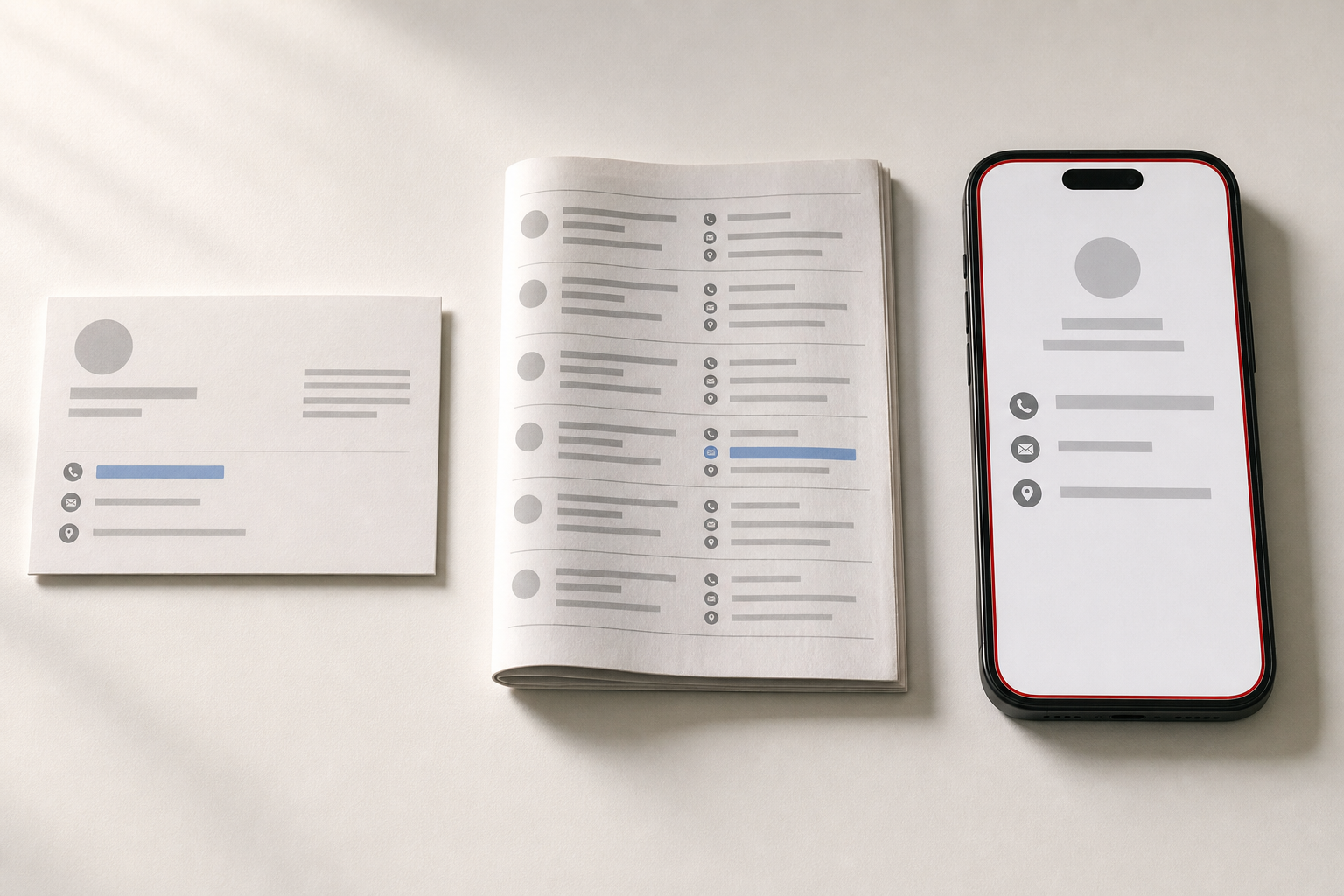
When NAP information is consistent across a website, directories, social profiles, and citations, a contractor builds credibility, avoids confusion, and strengthens local search performance.[6] When the name, address, and phone are stable, the relevance score improves.[6]
| NAP Element | Common Mismatch Source | Impact on AI Search Visibility |
|---|---|---|
| Phone number | Ads tracking number vs. GBP number | AI engines see two entities, diluting authority |
| Business name | ”LLC” included on some directories, omitted on others | Entity matching fails across Perplexity and Gemini |
| Address | Suite number formatted differently per directory | Google AI Overviews filter the listing from local results |
| Service area | Listed as city-only vs. county-wide on different platforms | AI search returns a competitor with cleaner geographic signals |
Audit every directory listing before building a review strategy. A backlink or a hundred reviews cannot fix a NAP conflict - the AI recommendation engine simply skips the listing on every search engine result page where it cannot verify the business exists.
How ChatGPT, AEO, GEO, Local SEO, and AI Overview Optimization Work for Insulation Contractors
Each AI search channel pulls from different trust signals - and an insulation contractor who treats them as one system leaves leads on the table. Google AI Overviews reward classic SEO signals: top-10 organic rankings, clean on-page structure, schema markup, and E-E-A-T authority. ChatGPT, Perplexity, and Gemini lean harder on third-party mentions, review language, and entity authority built off-site.
Here is how each layer maps to a concrete strategy:
| Channel | Primary Trust Signal | Key Tactic for Insulation Contractors | When It Drives Leads |
|---|---|---|---|
| Google AI Overview | Organic rank + structured data + E-E-A-T | Answer-first H2s, FAQ schema, top-5 ranking pages | Homeowner searches with local intent on Google |
| ChatGPT | Entity authority + third-party citations | Reddit, Quora, LinkedIn mentions; review volume | Conversational “who should I hire” queries |
| Perplexity | Cited sources + authoritative backlink profile | Press mentions, utility program pages, local news | Research-phase homeowner queries |
| Gemini | Google Business Profile + review signals | GBP completeness, Trustpilot reviews, structured NAP | Mobile-first local searches on Google |
AEO (Answer Engine Optimization) is the strategy of writing content so that any AI search engine can lift a clean, self-contained answer directly from your page. GEO (Generative Engine Optimization) extends that by building the off-page entity footprint - mentions on Reddit, YouTube, and local directories - that AI search engines use to confirm a brand is real and trusted. Local SEO ties both together at the map-pack and Google Business Profile level. An insulation company that runs all four in parallel dominates the search engine result page in both the organic column and the AI-generated answer block above it. Your customers are split: half Google you, half ask ChatGPT - and a unified strategy is the only way to show up for both halves.
Using Utility Rebate, Attic Insulation, and Energy-Code Pages as an AI Citation Magnet-and How Backlinks From Authoritative Local Sources Reinforce Your SEO for Insulation
The non-obvious angle most HVAC and insulation contractors miss: utility rebate pages are not just conversion tools - they are AI citation magnets that signal genuine local authority to Google AI Overviews, ChatGPT, Perplexity, and Gemini simultaneously.
Here is how the mechanism works. When a contractor publishes a page that accurately documents a local utility’s rebate program - specific dollar amounts, qualifying R-values, application deadlines - that page becomes citable by AI search engines because it contains verifiable, structured facts. ComEd, coordinating with Nicor Gas, expanded rebates for air sealing, attic and wall insulation, and duct sealing under the Illinois Home Performance with ENERGY STAR program, issuing completion certificates to homeowners.[7] A contractor page that references those specific program details becomes a source AI systems trust and quote.
The hidden trade-off: generic rebate pages that say “ask your utility for details” get ignored by AI search engines. Pages that name the program, the rebate amount, and the qualifying insulation type get cited. The depth requirement is the differentiator.
For Google AI Overviews specifically, a backlink from a local utility’s website or a state energy office carries more weight than a backlink from a generic directory - because Google AI still rewards authoritative off-page signals when deciding which sources to surface in the AI-generated answer block.[8] For ChatGPT and Perplexity, the citation value comes from the page content itself being quoted on third-party platforms like Reddit threads and local news articles that discuss rebate programs.
A practical guide for building this asset:
- Identify every utility rebate program active in your service area by name and dollar amount.
- Publish a dedicated page per program - not one combined page - so each page targets a specific search query.
- Add FAQ schema markup so Google AI Overview surfaces your answer directly on the search engine result page.
- Pitch the page URL to local energy bloggers, neighborhood Facebook groups, and Nextdoor moderators to generate the off-page mentions that AI search engines use as confirmation signals.
This strategy works for SEO for insulation and for AI SEO for HVAC contractors equally - because both verticals share the same utility program ecosystem and the same homeowner search behavior around energy costs. The contractors who document that ecosystem in specific, structured detail are the ones AI search engines recommend when a homeowner asks which local company to call.
Why ChatGPT Ignores Your Insulation Service Pages Even When They Rank on Page One and What HVAC Contractors Know About Fixing It
ChatGPT ignores page-one insulation service pages because AI search engines pull from entity authority and third-party mentions, not organic rank alone. Traditional SEO metrics including backlinks and domain authority predict only 4% to 7% of AI citation behavior.[9] HVAC contractors who figured this out early stopped optimizing exclusively for the search engine result page and started building the off-page signals - Reddit threads, Quora answers, Google Business Profile reviews, YouTube walkthroughs - that ChatGPT, Perplexity, and Gemini actually read.
The gap between ranking and being cited is the core problem for SEO for insulation work in 2026. Even at peak convergence, nearly half of AI Overview citations came from pages that were not ranking in the top organic positions for the same query.[9] That means a competitor with fewer backlinks and a lower domain authority gets cited in Google AI Overviews and ChatGPT results because their brand appears in more trusted third-party contexts.
The AI SEO strategy that HVAC contractors apply - and that every insulation contractor should adopt now - centers on three moves:
- Answer-first content structure - open every service page with a direct, self-contained answer sentence AI systems can lift verbatim.
- Off-page entity mentions - get the company name cited on Reddit, LinkedIn, and YouTube, not just linked from directories.
- Review language specificity - ask customers to name the service, the city, and the outcome in their Google reviews so AI search engines treat the brand as a verified local authority.
Google AI Overviews still reward classic on-page SEO signals - structured data, E-E-A-T, clean headers - but ChatGPT and Perplexity weight third-party mentions and review volume far more heavily. An insulation company that treats both surfaces as one identical strategy loses ground on both.
How to Name, Tag, and Sequence Jobsite Photos So AI Systems Treat Them as Proof of Expertise
Most contractors upload jobsite photos with camera-generated filenames like IMG_4872.jpg and wonder why AI search engines never surface them as proof of expertise. The fix is naming, tagging, and sequencing photos as structured evidence - not decoration.
Here is the non-obvious angle competitors miss: AI systems like Google AI (which powers AI Overviews and Gemini) parse image metadata, surrounding text, and page structure together to assess whether a page demonstrates genuine, first-hand experience. A photo named spray-foam-attic-insulation-denver-co-before.jpg paired with a caption that states the R-value installed, the square footage covered, and the energy savings the homeowner measured signals E-E-A-T in a way a generic stock photo never does.
Photo sequencing strategy for insulation contractor pages:
| Sequence Position | File Naming Convention | Caption Must Include | AI Signal Delivered |
|---|---|---|---|
| 1 - Before | [service]-[location]-before.jpg | Existing R-value, problem identified | Proof of diagnosis expertise |
| 2 - During | [service]-[location]-install.jpg | Product name, crew size, install date | Proof of active jobsite presence |
| 3 - After | [service]-[location]-after.jpg | Final R-value, sq ft covered | Verifiable outcome claim |
| 4 - Measurement | [service]-[location]-blower-door.jpg | Test result in ACH50 or CFM | Third-party-verifiable data point |
The hidden trade-off: HVAC contractors who run AI SEO for HVAC campaigns learned that AI SEO for HVAC photo pages with blower-door test results get cited in Google AI Overviews at a higher rate than pages with photos alone, because the test result is a verifiable, numeric claim an AI search engine can quote as a concrete fact. Insulation pages that include measurable outcomes - not just finished-job photos - give ChatGPT and Perplexity something citable.
Alt text follows the same rule. Write alt text as a complete, self-contained sentence: Spray foam insulation installed in a 1,200 sq ft attic in Aurora, CO, raising R-value from R-11 to R-49 in a single day. That sentence is liftable verbatim by an AI answer engine as a proof-of-expertise citation - which is the entire goal of a photo SEO strategy built for the 2026 search engine result page landscape.
Conclusion
AI SEO tips for insulation contractors in 2026 come down to one reality: Google AI Overviews, ChatGPT, Perplexity, and Gemini each pull from different trust signals, and winning in all four requires a system - not a single tactic. The contractors capturing leads right now combine answer-first content, location-specific pages, 50-plus detailed reviews, and third-party mentions on platforms like Reddit, YouTube, and LinkedIn into a unified strategy. Treating any one engine as optional means handing those leads to a competitor who shows up where you don’t. When choosing your next move, weigh which tools give you real-time AI visibility data, fastest backlink results, and the clearest picture of whether AI is recommending your business or someone else’s.
Frequently Asked Questions
What should I actually write on a spray foam or blown-in insulation service page so an AI like ChatGPT or Gemini cites my business?
Without clear, factual service page content, LLMs skip your business entirely and cite a competitor instead. Write each service page around a specific insulation type, the problem it solves, the regions you serve, and measurable outcomes like R-value improvements or energy savings. Use plain language that directly answers the question a homeowner types. AI visibility starts with content that reads like a trusted expert wrote it, not a brochure.
Which structured data markup types should I add to my insulation contractor website to help Google and AI tools understand my services and location?
Skip structured data and AI tools treat your insulation contractor website as an anonymous page with no location or service context. Add LocalBusiness schema with your service area, HomeAndConstructionBusiness type, and Service schema for each insulation type you offer. FAQPage schema is also high-leverage because it feeds directly into AI Overviews. These markup types are the fastest way to lock in how search engines and AI systems categorize your business.
What does ‘entity SEO’ mean for an insulation contractor, and what’s the minimum I need to set up to be recognized as a real local business by AI systems?
Entity SEO means AI systems recognize your business as a real, named contractor with a location, services, and reputation - not just a collection of keywords. At minimum, you need a fully verified Google Business Profile, consistent NAP (name, address, phone) across directories, and a website that uses structured data to confirm your identity. This foundation is what AI seo for insulation contractors depends on before any other tactic produces real revenue.
How do I write an FAQ section on my website that gets pulled into Google AI Overviews for insulation-related questions?
Businesses without FAQ sections lose AI Overview placements to competitors who have them, plain and simple. Write questions exactly the way homeowners ask them - short, conversational, present tense. Open each answer with a direct one-sentence response, then add one or two supporting facts. Apply FAQPage schema markup so Google and AI tools can parse the content instantly. This is one of the highest-leverage moves in ai seo tips for insulation contractors.
If a homeowner asks ChatGPT ‘who is the best insulation contractor near me,’ what signals does ChatGPT actually use to decide who to recommend?
ChatGPT pulls from publicly indexed content, review signals, and your backlink network to decide who to surface - contractors with thin online presence simply do not show up. Strong anchor text pointing to your site, consistent mentions across local directories, and detailed service pages all feed the search split between businesses AI recommends and those it ignores. The contractors winning those recommendations right now have built entity authority, not just a website.
Sources Cited
- "AI Search Engine Market." Market.us, https://market.us/report/ai-search-engine-market/.
- "Google users are less likely to click on links when an AI summary appears in the results." Pew Research Center, https://www.pewresearch.org/short-reads/2025/07/22/google-users-are-less-likely-to-click-on-links-when-an-ai-summary-appears-in-the-results/.
- "26 AI SEO Statistics for 2026 + Insights They Reveal." Semrush Blog, https://www.semrush.com/blog/ai-seo-statistics/.
- "3 ways to build a more complete SEO ROI model." Search Engine Land, https://searchengineland.com/build-more-complete-seo-roi-model-480577.
- "Local SEO Statistics 2026: 120+ Data Points for Business." Digital Applied, https://www.digitalapplied.com/blog/local-seo-statistics-2026-data-points.
- "Why is NAP consistency important for local SEO?." getphound.com, https://www.getphound.com/why-is-nap-consistency-important-for-local-seo.
- "Local Utilities and Other Energy Efficiency Program Sponsors | US EPA." US EPA, https://www.epa.gov/statelocalenergy/local-utilities-and-other-energy-efficiency-program-sponsors.
- "Local Utilities and Other Energy Efficiency Program Sponsors | US EPA." US EPA, https://www.epa.gov/statelocalenergy/local-utilities-and-other-energy-efficiency-program-sponsors.
- "The Content That Survives Google's AI Overview Filter - Silktide." Silktide, https://silktide.com/blog/writing-content-for-ai-overviews/.